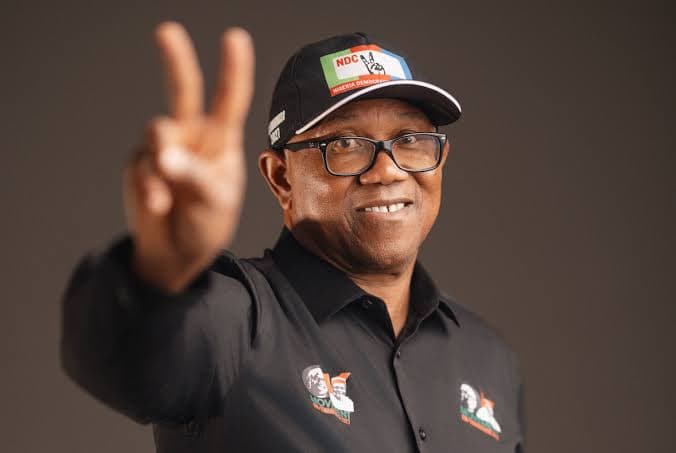
Key takeaways
- The market prices Obi at 12%, against 27.1% in the hub’s civic poll.
- The case for more: a split-vote history, weak incumbent approval and Atiku’s legal trouble.
- The case for less: past polls overstated him, turnout is low and the opposition is still divided.
- His price depends on consolidation, turnout and Kwankwaso’s northern pull.
- Polling day is 16 January 2027, and the market closes on 23 January.
Peter Obi’s 12% price on Bayse depends on three things: opposition voters coming together behind him, more Nigerians turning out to vote than in 2023, and his new party building a strong ground team before the election. If all three happen, 12% could be a bargain. But if even one falls short, the price may be too high.
This guide looks at the evidence for and against Obi’s chances to help you make your own call. You can trade the presidential market on Bayse or follow every race in the 2027 Elections Hub.
Where the Market Stands Right Now
On 19 November, the market looked like this:
| Candidate | Buy Yes | Chance | Multiple | Trades |
| Bola Tinubu (APC) | ₦72 | 71% | 1.4x | 3,615 |
| Peter Obi (NDC) | ₦13 | 12% | 8x | 2,316 |
| Atiku Abubakar (ADC) | ₦6 | 5% | 18.3x | 438 |
| Goodluck Jonathan | ₦3 | 2% | n/a | 556 |
The market has logged 7,800 trades and ₦144.6M in volume. Obi is the second most traded of the four outcomes shown, so this is a real debate, not a quiet one.
Now compare Bayse’s 12% price with the hub’s public poll. The NEIS civic poll puts Obi at 27.1%. This means traders are giving him less than half the support shown in the poll. The question is whether they are underestimating or overestimating his chances.
So, What is Creating the Uncertainty?
Obi has moved parties twice in five months. He left the Labour Party for the ADC in December 2025. In May, he quit the ADC, citing internal crises and litigation, and joined the NDC with Rabiu Kwankwaso. He received the NDC flag on 30 May, with Kwankwaso as his running mate.
The result is a ticket that pairs a southern base with a Kano machine. It is also a ticket on a brand-new platform, with a coalition whose true size nobody has measured at the ballot box.
What Makes NDC’s 12% Too Low?
- The 2023 arithmetic. Tinubu won with 8,794,726 votes. Atiku took 6,984,520 and Obi 6,101,533, according to INEC’s declared results. Together, the two challengers drew 13,086,053 votes. On paper, a united opposition would have beaten the winner by a wide margin.
- Weak incumbent numbers. One survey put Tinubu’s approval at 30.2%. If you want the full economic picture, read how his record could move his odds.
- Strong regional signals. In June, SBM Intelligence found the NDC leading national vote intention. It recorded 87.4% NDC support in the South-East and 45% in the South-West, against 22% for the APC.
- Atiku’s ticket is in legal trouble. On 5 November, a Federal High Court judgment invalidated the Mark-led ADC leadership and the primary that produced Atiku. The party has appealed. If the ruling stands, the ADC could be left without a candidate. Some of Atiku’s votes could then go to Obi.
What Makes NDC’s 12% Too High?
- Polls have overstated him before. In November 2022, a rural poll across 12 states put Obi at 40.37% of voting intention. He finished the 2023 election with about 25%. Enthusiasm does not equal votes.
- Turnout decides everything, and it is low. Only about 27% of registered voters voted in 2023. SBM’s own survey shows the NDC’s projected share swinging from 32% in a low-turnout scenario to 65% in a high-turnout one. Obi’s price depends on a turnout jump that has not happened before.
- The opposition is still split. Atiku has not stepped aside. Dino Melaye said on 12 November that Atiku is too big to be Obi’s running mate. Neither candidate attended the first G100 opposition summit in August.
- New party, old problem. Obi left two platforms over internal crises. The NDC is a new platform with no presidential election history of its own.
- The geography test. A winner needs at least 25% in two-thirds of the states and the FCT. In 2023, Obi won 11 states and the FCT. He needs a much wider spread in 2027.
Is This A Momentum or Residual Sentiment?
Traders who backed the Obidient wave in 2023 should run three tests.
- Does the base follow him across parties? In the South-East, the evidence says yes. SBM recorded 87.4% NDC support there.
- Does it travel? Less clearly. The South-West showed 45% for the NDC, but 23% were undecided, and the region reported the lowest intention to turn out at 44%.
- Does it show up? Surveys cannot settle that one. Obi led several polls in 2022 and finished third.
A base that follows, travels, and shows up is momentum. A base that only follows is residual sentiment. The 12% price for Peter Obi and the NDC sits between the two readings.
What You Must Believe at ₦13
| Condition | Why it matters | What to watch |
| The opposition vote consolidates | Two challengers split 13 million votes in 2023 | The Court of Appeal on the ADC case, and the 23 November opposition summit |
| Turnout rises well above 27% | The NDC’s share depends on it | Voter registration and card collection figures |
| Kwankwaso delivers the North-West | Obi needs northern votes to hit the 25% rule | Regional polls and defections in Kano |
If all three hold, a Yes at ₦13 looks cheap. If none do, a No at ₦88 looks safer. Most traders will land in between.
How to Trade It
Three markets let you express different views.
- Obi to win. Buy Yes at around ₦13 if you think his chance is above 12%. Buy No at around ₦88 if you think it is below.
- ADC and NDC are both on the ballot. The related market priced this at 77%. It is a direct read on consolidation.
- Obi and Atiku meeting. A separate market asks whether the two will meet in November.
You can sell before the vote. If a court ruling moves the price, you do not have to wait for 16 January. For more on how these prices move, read how market pricing works on Bayse.
FAQ
What are Peter Obi’s odds of winning in 2027?
12% on Bayse on 19 November. Check the live market for the current price.
Which party is Obi running under?
The Nigeria Democratic Congress (NDC). He left the Labour Party for the ADC in December 2025 and moved to the NDC in May 2026.
Who is Obi’s running mate?
Rabiu Kwankwaso.
Could Atiku drop out?
A court ruling has invalidated his nomination, and the ADC has appealed. The outcome is open.
Do polls favour Obi?
Some do, but surveys use different methods. The hub’s civic poll shows him at 27.1%, and none of them are forecasts.
Conclusion
Obi’s 12% sits between two stories. In one, a split opposition finally unites, and a motivated base turns out in force. In the other, the same base stays at home, and the party hopping costs him credibility. The market has chosen a middle number.
Think it is wrong? Take your side on the presidential market. New to trading? Read the guide to making a prediction, check the politics FAQs, and browse all political markets.