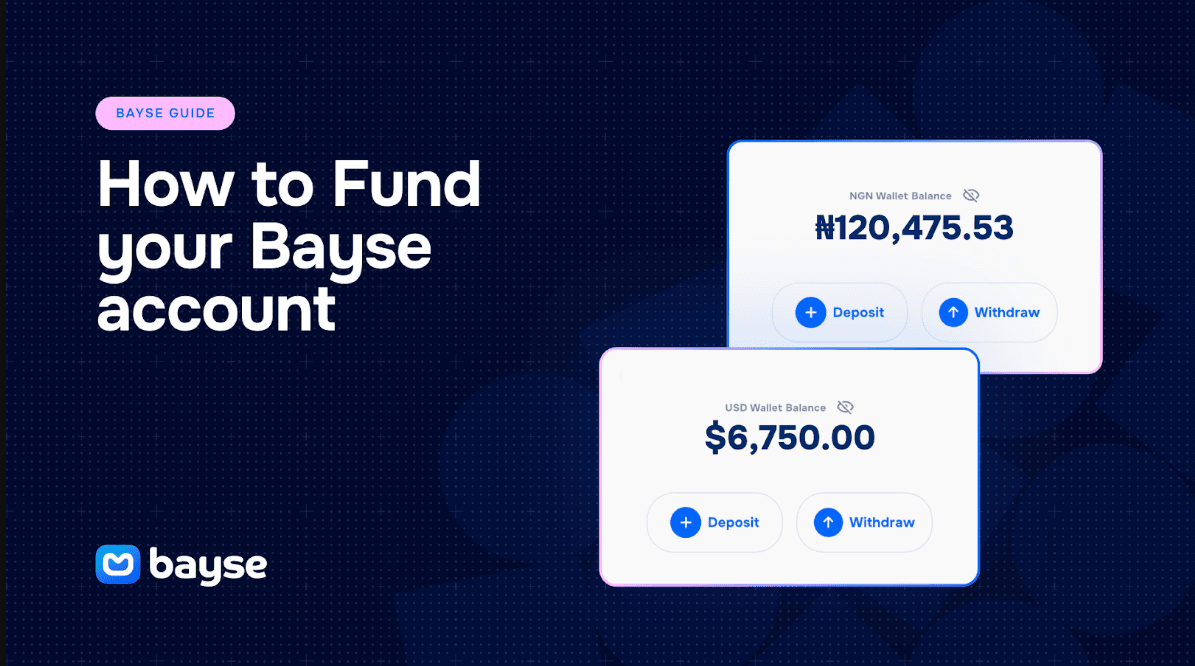
Before you can make a prediction on Bayse, you’ll need a balance in your wallet. Funding your account is quick and designed around payment methods that are familiar to Nigerian users, so there’s no need to navigate unfamiliar international payment rails just to get started. This guide covers how to fund your Bayse account, the available deposit methods, and a few things to keep in mind before your first deposit.
Also Read : Register on Bayse Easily
Where to Find the Funding Option
Once you’re logged in, your wallet balance is visible from your account dashboard. From there, selecting “Fund Account” or “Deposit” takes you to the funding flow, where you’ll choose an amount and a payment method.
Available Deposit Methods
Bayse supports a range of funding options built around how Nigerian users actually move money:
Bank transfer. Deposit directly from your Nigerian bank account using your usual transfer method. This is typically the most straightforward option and reflects in your Bayse wallet quickly.
Debit card. Fund your account directly with a Naira-denominated debit card for an instant deposit.
Other local payment channels. Depending on availability, Bayse may support additional Nigerian payment methods designed to make funding as frictionless as possible.
The exact list of available methods is shown directly in the funding flow, since payment options can be added or adjusted over time.
New to prediction? Find a Market You Know
Step-by-Step: Making a Deposit
- Open the funding screen. From your dashboard, select “Fund Account.”
- Choose your payment method. Pick whichever option is most convenient, bank transfer or card, for instance.
- Enter the amount. Decide how much you’d like to add to your wallet. There’s typically a minimum deposit amount, shown on screen before you confirm.
- Complete the payment. Depending on your chosen method, you’ll either be redirected to complete a bank transfer or asked to enter card details securely.
- Confirm your balance. Once the payment processes, your Bayse wallet updates automatically, and you’re ready to make a prediction.
How Long Deposits Take
Most funding methods on Bayse reflect near-instantly once payment is confirmed, particularly card payments and many bank transfers. Occasionally, a transfer may take a little longer to reflect depending on your bank’s processing times, but this is uncommon for standard deposits.
Do You Need to Verify Your Account to Fund It?
No. You don’t need to complete identity verification to fund your Bayse account or to start trading with that balance. Verification becomes relevant later, specifically when you want to withdraw funds, which is covered in detail in our guide on how to withdraw from Bayse.
A Few Things to Keep in Mind
Only fund what you’re comfortable trading with. Treat your deposit as money you’re prepared to see move with the markets you trade, rather than funds you need for something else in the short term.
Double-check your payment details. Whether you’re entering card information or initiating a transfer, a small error in details can delay your deposit from reflecting.
Keep an eye on any deposit limits. Depending on your account status, there may be a maximum amount you can deposit in a single transaction or over a given period. These limits are shown clearly in the funding flow if they apply.
What to Do Once You’re Funded
With a balance in your wallet, you’re ready to explore markets and make your first prediction. If you haven’t already, our guide on the types of prediction markets on Bayse is a good next step to help you find a market worth trading, followed by our step-by-step guide on how to make a prediction.
Discover: How Winnings Work on Bayse
Funding Before a Big Event
If you know you’ll want to trade around a specific upcoming event, a major match, an election, an awards show, it’s worth funding your account a little ahead of time rather than waiting until the last minute. Payment processing is normally quick, but giving yourself a buffer means you’re not rushing a deposit while prices are already moving quickly around live news. This is especially true around high-traffic moments on Bayse, when a lot of users are funding and trading at once.
Topping Up an Existing Balance
You don’t need to fund your account only once. If your wallet balance runs low, you can return to the funding screen at any time to add more, whether that’s a small top-up before a single trade or a larger deposit if you’re planning to be active across several markets. There’s no limit on how many times you can fund your account, only the per-transaction and periodic limits mentioned above, if they apply to your account.
If a Deposit Doesn’t Go Through
Occasionally a payment can fail without completing, whether due to a bank decline, a network issue, or an entry error. If this happens, your funds are not deducted, and you can simply try again, ideally checking your payment details closely before resubmitting. If a deposit seems to have gone through on your end but hasn’t reflected in your Bayse wallet after a reasonable amount of time, Bayse’s support team can look into the transaction and confirm its status.
Funding as Part of a Routine
For users who trade regularly, funding stops being a one-off task and becomes part of a routine, a quick top-up before checking a category you follow, or a larger deposit ahead of a week with several events you’re interested in. However you approach it, the process itself stays exactly the same each time.
Frequently Asked Questions
What is the minimum amount I can deposit? The minimum deposit amount is shown directly in the funding flow and may vary slightly by payment method.
Do I need to verify my identity before funding my account? No. Funding and trading don’t require identity verification. That’s only required when withdrawing funds.
How quickly will my deposit reflect in my wallet? Most deposits, particularly card payments, reflect near-instantly. Bank transfers occasionally take slightly longer depending on your bank.
Can I fund my account with an international card? Bayse is primarily built around Nigerian payment methods, so local bank transfers and Naira-denominated cards are the most reliable options.
Is there a fee for depositing funds? Any applicable fees are shown clearly before you confirm your deposit, so you’ll always know the exact amount reaching your wallet.